The Faculty of Biology was established in 2019 as a result of the division of the Faculty of Biology and Chemistry. In 1997 the Institute of Biology (together with the Institute of Chemistry) obtained the right to confer doctorate degrees in biological sciences in the field of biology. Three years later, the Faculty of Biology and Chemistry received the right to confer doctorate degrees in chemical sciences within the field of chemistry. Three years later in 2010 - the habilitation degree in biological sciences within the discipline of biology was obtained. In 2014, the Faculty obtained the right to confer the postdoctoral degree in the field of chemical sciences within the discipline of chemistry. In 2017, the Faculty received the scientific category B. The categories were awarded by the Evaluation Committee of Scientific Units. We educate students in the following fields of study: biology, chemistry, environmental protection, and eco-business.
The Faculty employs 86 staff, including 59 academic teachers and consist of more than 159 students within the Faculty.
Address:
Faculty of Biology
University of Bialystok
Ciolkowskiego 1J
15-245 Bialystok
HISTORY | FACULTY AUTHORITIES | KEY ACHIEVEMENTS
Academic biology in Białystok dates back to 1976.
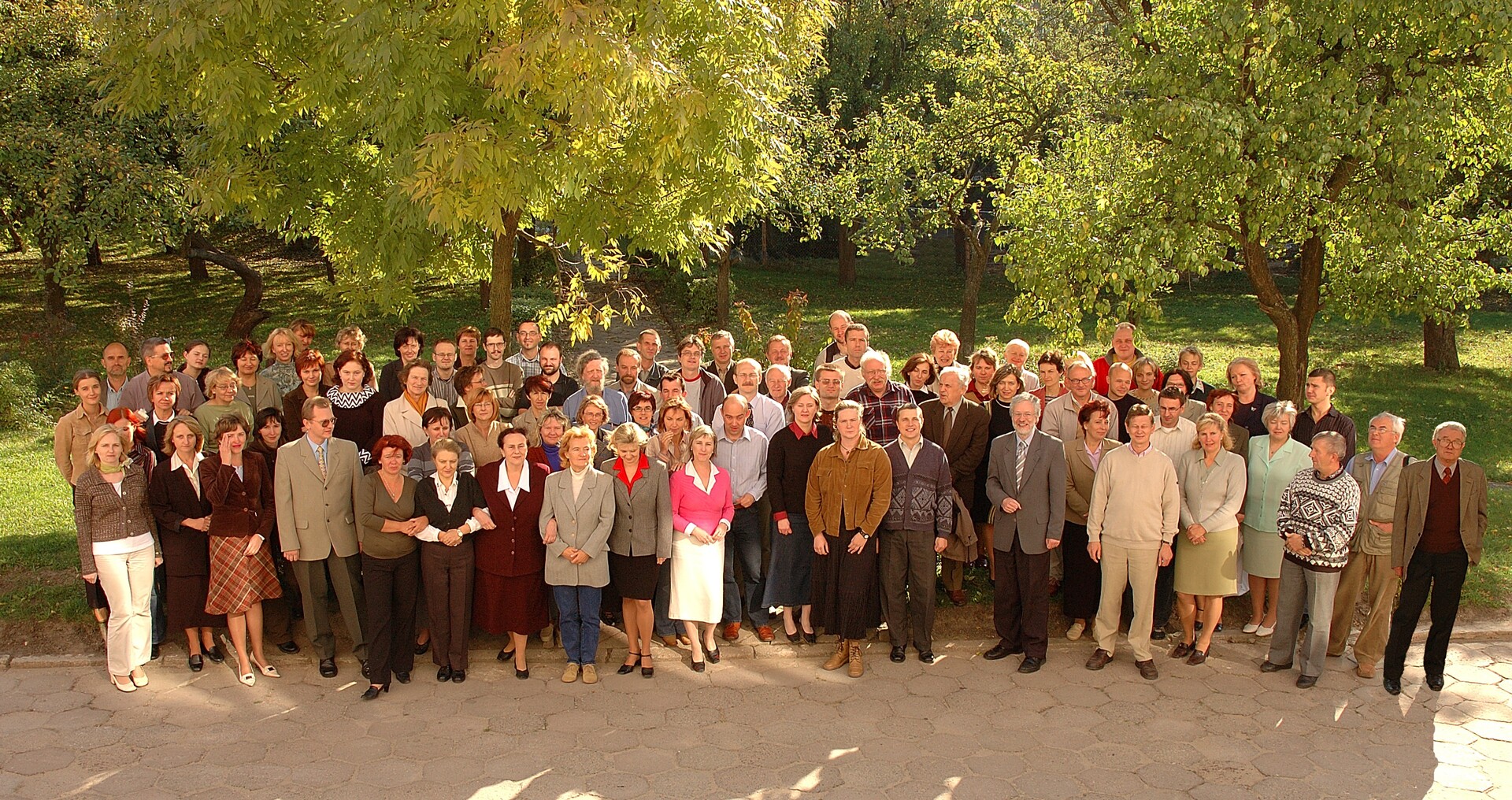
The history of university-level Biology dates back to 1976, when the Department of Biology was established within the Faculty of Mathematics and Natural Sciences of the University of Warsaw, then its Białystok Branch. The Department, founded and led for many years by Prof. Alina Kostelecka-Myrcha, PhD, DSc, was transformed into the Institute of Biology in 1989.
Following the establishment of the University of Białystok in 1997, the Faculty of Biology and Chemistry was created, comprising the Institute of Biology and the Institute of Chemistry. The first Dean of the Faculty of Biology and Chemistry at UwB was Prof. Marek Gębczyński, PhD, DSc, with Prof. Jacek Morzycki, PhD, DSc, and Dr Anatol Kojło serving as Vice-Deans.
In the years 1999–2005, the Faculty was headed by Prof. Jacek Morzycki, PhD, DSc, together with Vice-Deans Dr habil. Anatol Kojło, Prof. UwB, and Dr habil. Tadeusz Włostowski, Prof. UwB. From 2005, the position of Dean was held by Dr habil. Anatol Kojło, Prof. UwB, with Prof. Andrzej Górniak, PhD, DSc, and Dr habil. Tadeusz Krogulec, Prof. UwB, as Vice-Deans.
Prof. Dr habil. Anatol Kojło again led the Faculty during the 2008–2012 term, with Dr habil. Tadeusz Krogulec, Prof. UwB, and Dr habil. Iwona Ciereszko, Prof. UwB, serving as Vice-Deans. Subsequently, in 2012–2016, the Dean was Dr habil. Iwona Ciereszko, Prof. UwB, with Dr habil. Joanna Karpińska, Prof. UwB, and Dr Elżbieta Wołyniec as Vice-Deans. Since 2016, the position of Dean has been held by Prof. Beata Godlewska-Żyłkiewicz, PhD, DSc, with Dr habil. Piotr Zieliński, Dr habil. Ada Wróblewska, and Dr Elżbieta Wołyniec serving as Vice-Deans.
As a result of regulations introduced by the 2018 Higher Education and Science Act, known as the “Constitution for Science” (Act 2.0), the Faculty of Biology and Chemistry was divided in 2019 into two independent units: the Faculty of Biology and the Faculty of Chemistry. The first Dean of the Faculty of Biology was Dr habil. Piotr Zieliński, Prof. UwB, who simultaneously served as Chair of the Scientific Discipline Council for Biological Sciences. The Vice-Deans were: Dr habil. Andrzej Bajguz, Prof. UwB; Dr habil. Elżbieta Jekatierynczuk-Rudczyk (until 2020); Dr habil. Ada Wróblewska, Prof. UwB (until 2021); Dr habil. Anetta Borkowska (from 2020); and Dr Marek Bartoszewicz (from 2021).
In 1997, the Institute of Biology was granted the right to confer the doctoral degree in biological sciences in the field of biology (transferred to the Faculty in 2013). In 2010, the Faculty of Biology and Chemistry obtained the right to confer the habilitated doctor degree in biological sciences. This enabled the establishment, in the same year, of doctoral studies in biology and chemistry at the then Faculty.
A tangible outcome of this dynamic scientific development was the Faculty of Biology and Chemistry receiving an A category in the national parametric evaluation conducted in 2013. The quality of teaching is evidenced by certificates awarded in 2010 by the Polish Accreditation Committee following programme evaluations of degree courses. In 2016, the Polish Accreditation Committee conducted its first institutional evaluation of the Faculty of Biology and Chemistry, which resulted in a positive assessment, confirming that all quality criteria had been met.
In 1980, the first graduates of the five-year unified Master’s programme in Biology left the Department of Biology of the University of Warsaw Branch in Białystok. Since then, 1,240 people have obtained a Master’s degree in Biology. In the 2007/2008 academic year, education in the Bologna system was introduced (three-year Bachelor’s and two-year Master’s programmes). First-cycle (Bachelor’s) studies in Biology were completed by 539 graduates. The 2010/2011 academic year was the last year of education in the unified five-year Master’s programme. From the 2010/2011 academic year, second-cycle (Master’s) studies in Biology were launched, with 397 graduates. Additionally, in the academic years 2001/2002 to 2003/2004, supplementary studies in Biology were offered, resulting in 6 Master’s degree holders.
In the 1989/1990 academic year, first-cycle studies in Environmental Protection were launched (406 Bachelor’s graduates), followed by second-cycle studies from the 2006/2007 academic year, completed by 215 graduates by the 2016/2017 academic year.
The continuous development and increasing competencies of academic staff enabled the introduction of new specializations within first-cycle Biology studies: forensic biology, experimental biology, and molecular biology. At the second-cycle level, Biology offered the following specializations: molecular biology, forensic biology, environmental biology, and microbiology with biotechnology.
From the 2017/2018 academic year, students have also been able to study Eco-Business, an interfaculty programme jointly run with the Faculty of Economics and Management. Since the 2019/2020 academic year, 43 students have graduated with a Bachelor’s degree in this programme.
Currently, the Faculty of Biology educates students in three first-cycle (Bachelor’s) degree programmes (Biology, Eco-Business, and Microbiology) and two second-cycle (Master’s) degree programmes (Biology and Biology with a teaching qualification). From the 2020/2021 academic year, first-cycle Biology students began studying under a modified curriculum implemented as part of the project “A Modern University as an Opportunity for the Development of Future Regional Workforce” (POWR.03.05.00-00-Z218/18).
It is worth emphasizing that doctoral studies in biology have been offered since the 2011/2012 academic year. To date, 12 individuals have completed third-cycle studies and obtained the degree of Doctor of Biological Sciences. Since 2019, doctoral students have been able to pursue their education at the Doctoral School of Exact and Natural Sciences at UwB, which currently educates seven doctoral candidates in the discipline of biological sciences, four of whom are graduates of the Faculty of Biology.
A historic and milestone event in the development of our academic and teaching unit was the relocation in 2015 to a new building at 1J Konstantego Ciołkowskiego Street. We bid farewell to the former building on Świerkowa Street with nostalgia, but also with hope for further development. The modern, well-equipped lecture halls and laboratories in the Faculty of Biology building on the present UwB Campus are the result of the efforts of many people. Thanks to the commitment of past and current Faculty and Institute authorities, staff enjoy excellent conditions for research and teaching, while students benefit from high-quality educational facilities. Two faculty-wide laboratories were established for students: a Computer Laboratory and a Geographic Information Systems Laboratory. Following the receipt of the required permits from the Ministry of the Environment, a Genetic Engineering Laboratory was established at the Faculty of Biology. An open-ended permit was obtained for the contained use of genetically modified microorganisms (GMMs) classified in Category I, as well as for the contained use of genetically modified organisms (GMOs) also classified in Category I. The laboratory has been operating since 2018, enabling research involving Category I GMMs and GMOs.
More than 45 years of our history represent a period of intensive research and teaching activity and dynamic development, associated not only with a gradual increase in the number of academic staff but, above all, with scientific advancement. We have consistently strengthened our position by: (1) publishing research results in renowned international journals, (2) securing funding through national and international research projects (grants), and (3) conducting scientific cooperation with more than 50 institutions from 30 countries worldwide. For educational purposes and science communication, Biology staff have published numerous academic textbooks, monographs, nature albums, and book chapters with international and national publishers, including Springer, Elsevier, Academic Press, PWN Scientific Publishers, and the University of Białystok Press. Our staff have served as editors and members of editorial boards of scientific journals, participated in scientific and programme councils of academic societies, research institutions, and state bodies, and acted as experts—roles that testify to the well-established and recognized position of our academic community.
Making use of its unique location in a region of exceptional natural value on a European scale, the Faculty of Biology continuously expands both its research scope and educational offer. A particular highlight is the Field Scientific and Teaching Station of the Faculty of Biology of the University of Białystok, established in 2008 and located in Gugny within the Biebrza National Park. The station was created thanks to funding from the European Regional Development Fund, the Ministry of Science and Higher Education, the University of Białystok, and a private donation from Prof. Gilbert L. Dryden (USA). Numerous scientific studies are conducted there in cooperation with researchers from around the world, along with a wide range of teaching activities for our students and for participants from other universities in Poland and abroad.
Since the very beginning of university-level Biology, the Biology Students’ Scientific Society has played an important role in its history, conducting research within botanical, entomological, herpetological, ornithological, microbiological, and photographic sections.
Together with our students, we are strongly engaged in a wide range of science outreach activities held at the Faculty and the University, such as the Night of Biologists, March Meetings with Science, Meetings with Flora, the Podlasie Festival of Science and Art, and Afternoon Coffee with Milk. Faculty staff annually prepare lecture programmes for secondary schools, addressing current issues in biology and nature conservation. An example is the online course “The Key to the Biology Matura – Face to Face with a Matura Examiner,” supporting prospective students in preparing for the biology school-leaving examination. Projects addressed to pupils from the region and across Poland are also implemented, including the Youth University of Natural Sciences (funded by the National Fund for Environmental Protection and Water Management and implemented since 2020), the Young Researcher Academy, the Biology Olympiad, the Biological Knowledge Olympiad, and the Geography Olympiad. These initiatives contribute to improving the quality of school education and stimulate interest in nature among students and the wider public.
The history of the Faculty of Biology (initially the Department and later the Institute) is inseparably linked with two exceptional and highly charismatic figures: Prof. Alina Myrcha, PhD, DSc - the founder of university-level biology in Białystok and long-serving director - and her husband, Prof. Andrzej Myrcha, PhD, DSc. Inspired by them and supported by their goodwill, over nearly 50 years a great many individuals have devotedly and passionately built our position in Poland and internationally, while the collective effort invested in disseminating and promoting biological knowledge has become a lasting part of our history.


1976–1989
Head: Dr habil. Alina Kostelecka-Myrcha
Deputy Head: Dr Maciej Kamiński (1985–1989)
1989–1991
Director: Dr habil. Alina Kostelecka-Myrcha
Deputy Directors: Dr Maciej Kamiński, Dr Eugeniusz Moczydłowski
1991–1993
Director: Prof. Stanisław Maleszewski, PhD, DSc
Deputy Directors: Dr habil. Wojciech Staręga, Dr Jan Raczyński, Dr Jan Taylor
1993–1997
Director: Prof. Andrzej Myrcha, PhD, DSc
Deputy Directors: Dr Anna Mical (1993–1996), Dr Emilia Brzosko (1996–1997), Dr Jan Taylor
1997–2002
Director: Prof. Alina Kostelecka-Myrcha, PhD, DSc
Deputy Directors: Dr habil. Jan Taylor, Dr Emilia Brzosko
2002–2008
Director: Dr habil. Jan Taylor
Deputy Director: Dr habil. Emilia Brzosko
2008–2014
Director: Prof. Andrzej Górniak, PhD, DSc
Deputy Director: Dr Adam Tylicki
Acting Deputy Director: Dr Piotr Zieliński (2013–2014)
2014–2016
Director: Dr habil. Adam Tylicki
Deputy Director: Dr habil. Elżbieta Jekatierynczuk-Rudczyk
2016–2019
Director: Dr habil. Elżbieta Jekatierynczuk-Rudczyk
Deputy Director: Dr habil. Danuta Drzymulska
2019–2020
Dean: Dr habil. Piotr Zieliński, Prof. UwB
Vice-Deans: Dr habil. Andrzej Bajguz, Prof. UwB; Dr habil. Elżbieta Jekatierynczuk-Rudczyk; Dr habil. Ada Wróblewska, Prof. UwB
2020–2024
Dean: Dr habil. Piotr Zieliński, Prof. UwB
Vice-Deans: Dr habil. Andrzej Bajguz, Prof. UwB; Dr habil. Anetta Borkowska; Dr habil. Ada Wróblewska, Prof. UwB (until 2021); Dr Marek Bartoszewicz (from 2021)
2024–2028
Dean: Dr habil. Andrzej Bajguz, Prof. UwB
Vice-Deans: Prof. Mirosław Ratkiewicz, PhD, DSc; Dr habil. Katarzyna Jadwiszczak; Dr Marek Bartoszewicz
1976
1976–1989
1981
1985
1988
1989
1997
1999
2000
2001
2007
2008
2009
2010
2011
2012
2013
2014
2015
2016
2017
2019
2020
2021–2022
2022
2023
2024
2025